
The Myth That’s Costing You a Pool
A 20×40-foot yard and a pool do not have to be mutually exclusive. Across Upstate South Carolina and the Augusta area, some of the most satisfying pool projects we complete happen in backyards that most homeowners would write off as “too small.” The assumption that you need a sprawling lot is one of the most persistent misconceptions in pool design — and it’s completely wrong.
Small backyard pools are not a compromise. Done right, they’re purpose-built for the way real families actually use outdoor spaces: daily swims, weekend gatherings, and a cold plunge after a long day in 95-degree South Carolina heat. The key is matching the design to your yard’s actual geometry, not cramming a standard pool shape into a space that can’t hold it.
Here’s what twenty-seven years of pool installations across this region has taught us: compact pool designs often produce more enjoyment per square foot than large ones.
How Small Is “Small”? Setting Realistic Expectations
Before you can pick a design, you need to know your actual usable space. In South Carolina, yards in established neighborhoods — think older streets in Greenwood or Greer — routinely have 30 to 50 feet of open backyard depth after accounting for the home’s footprint, utility easements, and setback requirements. That’s more than enough for a functional inground pool.
A standard plunge pool runs roughly 10×14 to 12×20 feet. A compact lap pool typically starts at 8 feet wide and 25 feet long — narrow enough to fit alongside a patio or fence line without consuming the whole yard. Even a modest fiberglass shell in the 12×24 range, one of the most popular sizes we install, fits comfortably on a 40-foot deep lot with room left for a small deck and landscaping buffer.
The real planning question isn’t whether your yard is large enough — it’s whether the pool, deck, and any required safety barriers can coexist with your existing site features. That calculation requires someone standing in your yard with experience, not just a tape measure.
Small Backyard Pools: Which Shape Works Where
Shape selection is where compact pool design either succeeds or fails. The wrong choice turns a manageable space into a cramped one. The right choice makes the yard feel intentional and open.
Rectangle pools are the most space-efficient shape you can install. Their clean geometry lets you push the pool close to a fence line or retaining wall, leaving the remaining yard open for deck space or a patio. For pools for small yards, rectangles also make swim lanes possible — critical if exercise is part of your motivation.
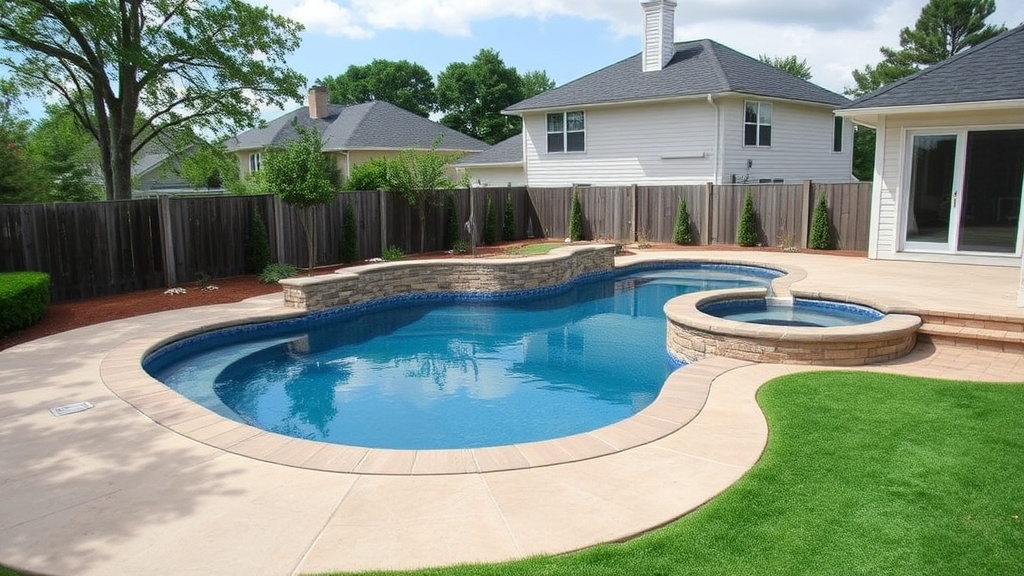
Kidney and freeform shapes are visually appealing but consume more square footage than their stated dimensions suggest. The curved geometry creates awkward corners on both sides of the pool that become difficult to use. In tight yards, that’s wasted space you’ll regret. We’ve renovated enough freeform pools in crowded backyards to say plainly: save freeform shapes for large lots.
Plunge pools deserve more attention than they get. These small-footprint pools — typically 10 to 15 feet long and 6 to 8 feet wide — are explicitly designed for cooling off rather than lap swimming. In a Chapin or Bluffton backyard where space is genuinely tight, a plunge pool with a built-in spa jet system delivers the core experience of pool ownership at a fraction of the footprint. Installed costs typically run in the $25,000–$40,000 range depending on features and site conditions.
Fiberglass vs. Vinyl: What Actually Makes Sense in a Small Yard
The fiberglass vs. vinyl pools debate plays out differently in compact spaces than most buyers expect. Both are excellent choices, but each has attributes that matter more — or less — when square footage is tight.
Fiberglass pools arrive as pre-manufactured shells, which means the shape options are fixed by the manufacturer’s mold catalog. For small yards, that’s actually a feature, not a limitation. Manufacturers have invested heavily in compact and mid-size shell designs — 12×24, 10×20, and plunge-format options — that are structurally optimized from the factory. Installation is faster, typically completed in a week compared to two to three weeks for vinyl. In South Carolina’s unpredictable spring weather, a shorter installation window matters.
Fiberglass also carries a maintenance advantage that compounds over time. The nonporous gelcoat surface resists algae growth, which reduces chemical demand during South Carolina’s brutal summer months when pool water temperatures can exceed 90°F. For pool care in South Carolina, that’s not a trivial benefit — high-temperature water accelerates algae blooms and chemical consumption.
Vinyl liner pools allow truly custom shapes and dimensions, which gives you more geometric flexibility in an irregular yard. If your backyard has an odd angle or a utility easement that cuts diagonally across the space, a vinyl build can accommodate it precisely where a fiberglass shell cannot. Liner replacement — typically every 8 to 12 years — adds a long-term maintenance cost to factor into your decision, and when to resurface or reline depends heavily on sun exposure and chemical history.
Layout Strategies That Make Small Pools Feel Bigger
The pool itself is only part of the equation. Thoughtful layout transforms a tight space from claustrophobic to cohesive.
One of the most effective techniques in compact yards is pool and deck integration — designing the deck and pool simultaneously rather than treating the pool as a standalone feature. When the deck wraps two sides of the pool using the same surface material as the surrounding patio, the eye reads the entire space as one continuous area rather than a pool squeezed into a yard. This is also where pool and deck installation order matters: always set the pool shell or liner before pouring or laying any decking. Installing deck hardscape first and fitting the pool around it is a common sequencing mistake that forces compromises in both drainage and aesthetics.
Vertical elements help, too. A raised spillover spa on one end of a compact pool adds visual depth without consuming ground space. Framing the pool with low-profile plantings — ornamental grasses rather than large shrubs — keeps the sightlines open. In Upstate South Carolina yards with mature oak canopy overhead, keeping plant heights low also reduces the debris load that drives up maintenance time and cost.
Tanning ledges are another smart addition in small pools. Built into the shallow end of the pool itself, a tanning ledge (typically 6–9 inches deep, 4–6 feet wide) functions as a water lounge without requiring additional square footage. Families with young children find them invaluable. Several compact fiberglass shells now include tanning ledges as an integrated feature rather than a custom add-on.
Real Yards, Real Results: What We’ve Seen in the Field
After installing and maintaining hundreds of pools across this region since 1999, a few patterns stand out clearly.
A homeowner in a Greenwood neighborhood with a 35-foot backyard depth was certain she didn’t have room for a pool. A 12×22 fiberglass rectangle, set parallel to the fence with a 6-foot concrete deck on one side and a 4-foot safety buffer on the other, fit with room to spare. She swims in it daily from May through October. The installation took six days.
A family in the Augusta market wanted a pool and an outdoor kitchen in a 40×45-foot backyard. By positioning a 10×20 plunge pool against the back fence and building the outdoor kitchen into the side perimeter, both features coexisted without the yard feeling consumed. The key was treating the entire outdoor space as one design rather than two competing projects.
These aren’t exceptional cases. They’re what thoughtful compact pool design produces when the planning starts with your yard’s specific constraints rather than a catalog.
One Detail Most Buyers Miss
Many homeowners focus entirely on the pool dimensions and overlook what surrounds it. South Carolina requires a minimum 4-foot barrier (fence or wall) around all residential pools under most county codes, and that barrier needs its own clearance from the pool edge. In a tight yard, you can lose 3 to 5 feet on each side just to code compliance if you haven’t planned for it from the start. Building that buffer into the initial layout — rather than discovering it after breaking ground — saves real money and eliminates the most common source of last-minute design changes we see during permitting.
A contractor who knows your county’s specific requirements before the first shovel goes in is worth more than one who learns them during the permit process. Kirks Pools and Hearth has been pulling permits across South Carolina and Georgia counties for 27 years, and that familiarity shows up in smoother projects and fewer surprises for homeowners.
Your Small Yard Is Not the Problem
The right pool design for a tight space starts with accurate measurement, honest conversation about how you’ll actually use the pool, and an installer who’s built enough compact pools to know which shortcuts cost you later. Stop waiting for a bigger yard. The yard you have is almost certainly workable.
Written by the Kirks Pools and Hearth team — voted #1 Pool Builder in South Carolina, with 27 years of fiberglass and vinyl pool installations across Upstate South Carolina and Georgia.
Schedule a free on-site consultation with the team at kirkspool.com and find out exactly what your backyard can hold.